Skip to the article

T A B I A R A · TRAVEL FURTHER

Kyoto Day Trip from Osaka: Trains and Two Routes That Work

Which train to take from Osaka to Kyoto, and two realistic one-day routes: Fushimi Inari to Gion, or Arashiyama, with yen budgets.

By Tabiara Editorial6 min read

Thoughtful routes, remarkable places and stories for the road. Find a fresh perspective and travel at your own pace.

Skip to the article ↓
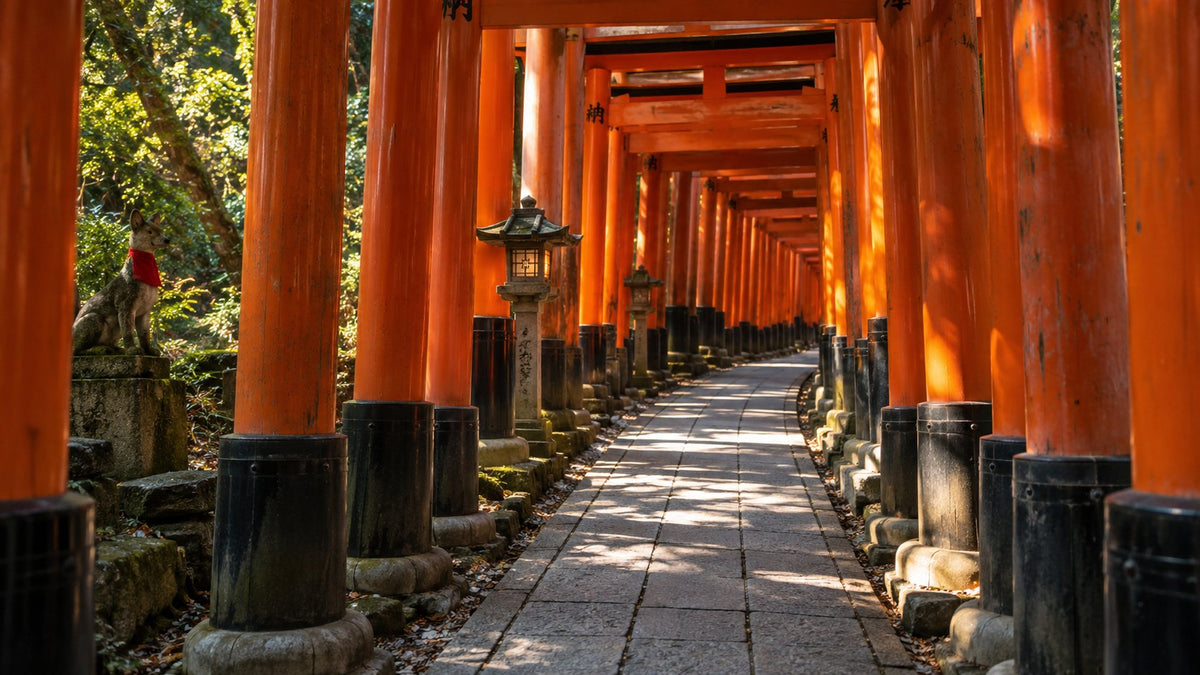
Torii gate path at Fushimi Inari in Kyoto (illustration)

A Kyoto day trip from Osaka works well because the two cities are 15–50 minutes apart by train. The simplest plan is to choose one side of Kyoto: the east (Fushimi Inari, Kiyomizu-dera, Gion) or the west (Arashiyama), and not try to see both in one day. If you are still deciding how many days to give Osaka and Kyoto, our Osaka Itineraries include a Kyoto day route that starts and ends at an Osaka station.

Kyoto is big, and its bus network is slow and crowded at the popular sights. Most disappointing Kyoto days come from trying to cross the city twice. Pick one area, use trains as far as possible, walk the rest, and be back in Osaka for dinner.

Which train to take

Your Osaka hotel area decides the line. All of these take IC cards such as ICOCA, except reserved Shinkansen seats.

  • JR Special Rapid from Osaka Station (Umeda) to Kyoto Station. About 30 minutes, roughly ¥600–700. Best for Fushimi Inari (change to the JR Nara Line, two stops) and for Arashiyama (JR Sagano Line to Saga-Arashiyama).
  • Hankyu Kyoto Line from Osaka-umeda to Kyoto-kawaramachi. About 40–50 minutes on a limited express, usually a little cheaper than JR. It ends in central Kyoto, a short walk from Gion and Pontocho.
  • Keihan Main Line from Yodoyabashi or Kitahama. About 50 minutes to Gion-shijo. It stops at Fushimi-inari on the way, which makes it the easiest choice for an east-Kyoto day from central Osaka.
  • Shinkansen from Shin-Osaka to Kyoto. About 15 minutes, but noticeably more expensive. Only worth it with a rail pass or if you are already at Shin-Osaka.

From Namba, take the Midosuji Line north to Umeda or Yodoyabashi first (10–15 minutes). Our transport overview, Osaka to Nara and Kyoto: day trips by train, compares the lines side by side.

Route 1: East Kyoto (Fushimi Inari, Kiyomizu-dera, Gion)

  • 07:30–08:00 Fushimi Inari Taisha. Arrive early. The shrine grounds are open around the clock and the first stretch of torii gates is crowded by mid-morning. Walking to the Yotsutsuji crossing, about halfway up the hill, takes 30–45 minutes from the main gate and gives you a view over south Kyoto. The full loop to the summit takes 2–3 hours, which most day-trippers skip.
  • 10:30 Kiyomizu-dera. Take the Keihan Line to Kiyomizu-gojo (about 10 minutes), then walk uphill for 20–25 minutes. The temple's wooden stage is its best-known view. Allow 60–90 minutes including the approach streets.
  • 12:30 Sannenzaka and Ninenzaka. The preserved slopes below the temple are lined with shops and snack stalls. They are narrow and very full at midday, so walk through rather than queue at every shop.
  • 14:00 Yasaka Shrine and Gion. 15–20 minutes downhill. Walk Hanamikoji Street and the Shirakawa canal area. Parts of Gion's private lanes have photo restrictions and fines; follow the signs.
  • Late afternoon. Take the Keihan Line from Gion-shijo or the Hankyu Line from Kyoto-kawaramachi straight back to Osaka.

Route 2: West Kyoto (Arashiyama)

  • 08:00 Arashiyama bamboo grove. From Kyoto Station, the JR Sagano Line reaches Saga-Arashiyama in 15–20 minutes. The grove path is short; its appeal is the light and the quiet, and both disappear by 10:00.
  • 09:00 Tenryuji. A Zen temple and one of the World Heritage sites of historic Kyoto, with a pond garden facing the hills. The garden has a separate small fee from the halls.
  • 10:30 Okochi Sanso or the river. Okochi Sanso is a villa garden at the top of the grove, quieter and more expensive than most gardens here. Or walk down to the Togetsukyo Bridge and along the Katsura River.
  • Lunch. Tofu and soba restaurants line the main street. Expect queues at peak times.
  • Afternoon options. The monkey park on Mount Iwata (a steep 20–30-minute climb), a boat on the river in season, or the Sagano Romantic Train if you booked it. Then return via Kyoto Station, or take the Hankyu Arashiyama Line and change at Katsura for Osaka-umeda.

What a Kyoto day from Osaka costs

Rough planning ranges per person:

  • Return train: about ¥800–1,600 on JR, Hankyu or Keihan, more by Shinkansen.
  • Temple and garden fees: ¥500–1,500 per site. Fushimi Inari and Yasaka Shrine are free.
  • Lunch: ¥1,200–3,000 for a set meal, more for kaiseki.
  • Snacks and drinks: ¥1,000–2,000.

A realistic total is ¥4,000–8,000 per person without shopping. Prices change, so check the official sites before you go.

Mistakes that cost you time

  • Using the bus from Kyoto Station at midday. The lines to Kiyomizu and Gion are often full. Trains and walking are usually faster.
  • Starting at 10:00. Fushimi Inari and Arashiyama are much better before 09:00. Leave Osaka by 07:00–07:30 if you can.
  • Planning Kinkakuji, Arashiyama and Fushimi Inari together. They are on three different sides of the city. Save the north for another day or a second trip.
  • Forgetting the season. Autumn leaves (mid-November to early December) and cherry blossom (late March to early April) bring the heaviest crowds of the year. Go very early or choose quieter temples.

Plan B for rain

Light rain suits Kyoto: the moss gardens look better and the crowds thin. In heavy rain, drop Fushimi Inari's upper paths and the bamboo grove and spend more time indoors: Nishiki Market is covered, and the Kyoto National Museum and department stores near Shijo-Kawaramachi keep you dry. If a typhoon warning is issued, stay in Osaka and check the rail operators' notices before travelling.

Frequently asked questions

Is one day in Kyoto enough?

For one area, yes. One day gives you either the east side or Arashiyama at a relaxed pace. If you want both plus Kinkakuji, plan two separate day trips or stay a night in Kyoto.

Should I stay in Kyoto or do a day trip from Osaka?

Day trips work well if Osaka is your base, because trains are frequent and cheap. Staying in Kyoto helps if you want to be at the sights before 08:00 every day or see Gion in the evening without a train ride back.

Do I need a rail pass for Osaka to Kyoto?

Usually not. The private Hankyu and Keihan lines and JR local services are inexpensive with an IC card. Regional passes can pay off only if you also travel to Nara, Kobe or Himeji within the validity period, so add up your actual fares first.

Plan the rest of your Kansai days

Our Osaka Itineraries – 10 Day Routes + 3, 5 & 7-Day Plans show where a Kyoto day fits next to Namba, Osaka Castle and Nara, with timings for each route. For the lines, IC cards and passes, see the Osaka Train Survival Kit. Both come in English, Spanish and German. For the train ride home, The Mending Room in Osaka is a quiet novel set in the city's neighbourhoods, available in English and Spanish.

Times and prices are planning estimates, not timetables or guaranteed prices. Check official sources for your travel dates.

Share this storyShare by email

More stories from the Tabiara Journal.

Keep exploring

All articles ↗

LETTERS FROM TABIARA

A little wanderlust. Delivered to your inbox.

Fresh travel ideas, stories and tips from Tabiara. For your next big adventure or a little escape along the way.

Privacy policy

What experiences or questions would you like to share?

Thoughts on the journey

No comments yet. Share your thoughts.