Koh Samui Night Markets: Which Night, What to Eat and What It Costs
Koh Samui's walking streets and night markets by area and evening, dishes to try, prices in baht and tips for a good...
Artikel lesen ↗
Sprache und Währung
T A B I A R A · TRAVEL FURTHER
What Nyonya (Peranakan) food is, the dishes and kuih to look for in Penang, how to order, and where to try them in George Town.
Besondere Orte, durchdachte Routen und Geschichten für unterwegs. Finde neue Perspektiven – und reise in deinem Tempo.
Direkt zum Artikel ↓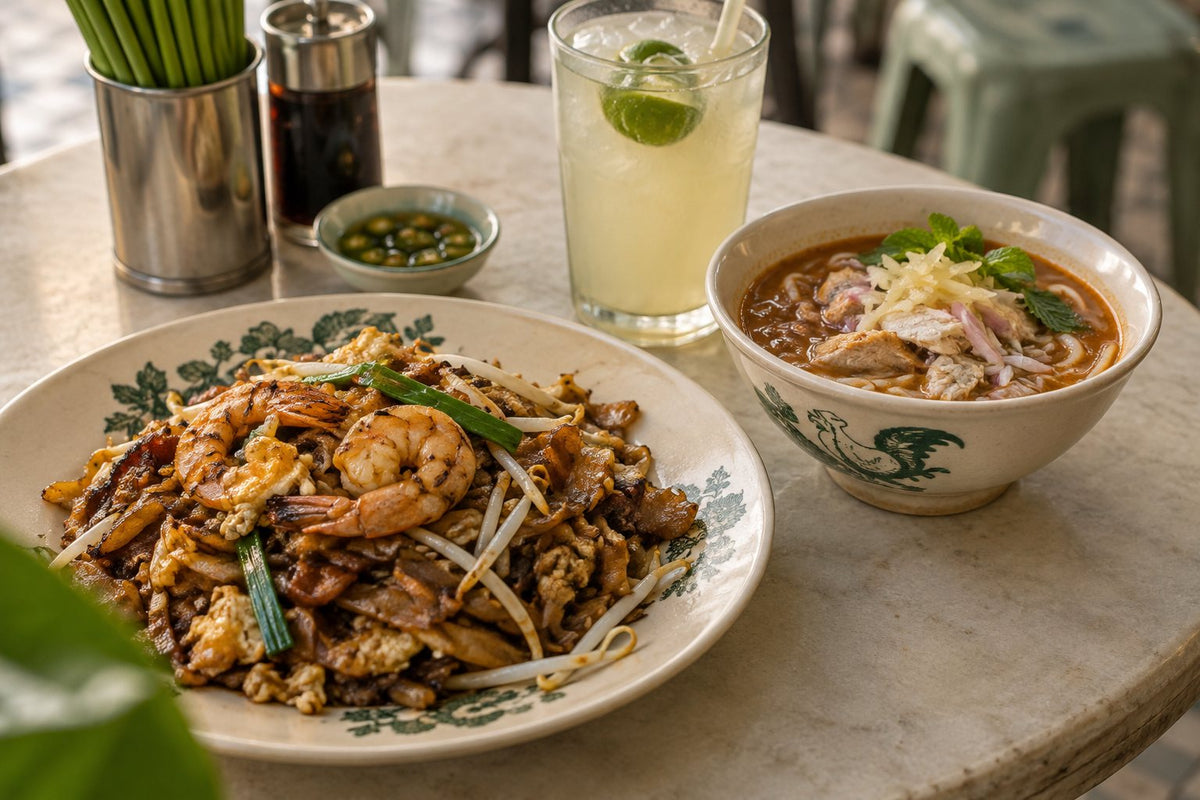
Nyonya cooking is the food of Penang's Peranakan (Straits Chinese) families: Chinese techniques combined with Malay spices, tamarind, lemongrass, galangal and shrimp paste. To try it properly, have one sit-down Nyonya meal with shared dishes such as perut ikan, jiu hu char and curry kapitan, and one afternoon break with Nyonya kuih, the small coloured rice cakes. Our Penang Offline Place Guide includes a Nyonya restaurant and a kuih café in George Town, and you can choose English, Spanish or German as your edition.
"Nyonya" refers to Peranakan women, who were the keepers of the household kitchen. The cooking grew out of Chinese families settling in the Straits ports and adapting to local ingredients. Penang's version leans towards sour and spicy flavours, with more tamarind and influences from nearby Thailand, while Melaka and Singapore Nyonya food is often described as sweeter and richer in coconut.
Much of it takes time: spice pastes (rempah) are pounded and fried slowly, and many dishes taste better the next day. That is why Nyonya food is mostly found in restaurants and family kitchens, not at fast hawker stalls.
Kuih are small cakes made mainly from rice flour, glutinous rice, coconut and palm sugar (gula Melaka), often coloured with pandan or butterfly pea flower. Look for:
Kuih usually cost a few ringgit per piece. Buy a mixed selection and share. They are best on the day they are made, so go before mid-afternoon, when the best choice is often sold out.
For a restaurant meal, plan roughly RM 30–70 per person for a few shared dishes and rice. Prices vary widely; check the menu.
Nyonya cooking is only one part of Penang's food story. On the same trip, look for char koay teow (wok-fried flat noodles), Hokkien mee (prawn noodle soup), cendol (shaved ice with coconut milk and palm sugar), nasi kandar (rice with curries) and rojak (fruit and vegetable salad with a sweet, dark sauce). Comparing a Nyonya restaurant meal with a hawker centre dinner shows how many communities shaped what people eat in Penang.
Vegetarian travellers need to ask carefully. Many dishes that look like vegetables contain shrimp paste, dried shrimp, fish sauce or meat stock. Some kuih are naturally vegetarian, as they are made from rice flour, coconut and sugar, but check about eggs and lard if that matters to you. A few vegetarian restaurants in George Town cook Nyonya-style dishes with plant-based ingredients; ask locally which ones are open during your stay.
The cooking of the Peranakan (Straits Chinese) community, combining Chinese techniques with Malay ingredients such as tamarind, lemongrass, galangal and shrimp paste.
Some dishes are, but many are sour or rich rather than hot. Chilli sambal is usually served separately, so you can control the heat.
Often not, because pork and lard are traditional ingredients. Ask the restaurant directly, and look for halal certification if you need it.
The Penang Offline Place Guide lists the food stops we picked with background and visit tips, and the Penang Itineraries fit them into walking days. Choose English, Spanish or German as your edition. All titles are in the Penang travel guides collection.
Prices and opening days are planning estimates. Check with each restaurant before you go.
Weitere Geschichten aus dem Tabiara-Reisemagazin.
Koh Samui's walking streets and night markets by area and evening, dishes to try, prices in baht and tips for a good...
Artikel lesen ↗Palm Cove and Trinity Beach compared: atmosphere, price level, swimming and stinger nets, buses, and how reef days work from the northern...
Artikel lesen ↗Set aside half an hour in Dubai for two practice themes: Volleys: short movement, clear target and Overheads: position first. Start without...
Artikel lesen ↗Welche Erfahrungen oder Fragen möchtest du teilen?
Noch keine Kommentare. Teile gern deine Gedanken.

