
Your Amsterdam padel session: Forward together, back together
Set aside half an hour in Amsterdam for two practice themes: Forward together, back together and The middle belongs to both of...
Artikel lesen ↗
Sprache und Währung
T A B I A R A · TRAVEL FURTHER
When the leaves peak around Osaka, the best spots in the city and just outside, evening illuminations and a one-day leaf-viewing route.
Besondere Orte, durchdachte Routen und Geschichten für unterwegs. Finde neue Perspektiven – und reise in deinem Tempo.
Direkt zum Artikel ↓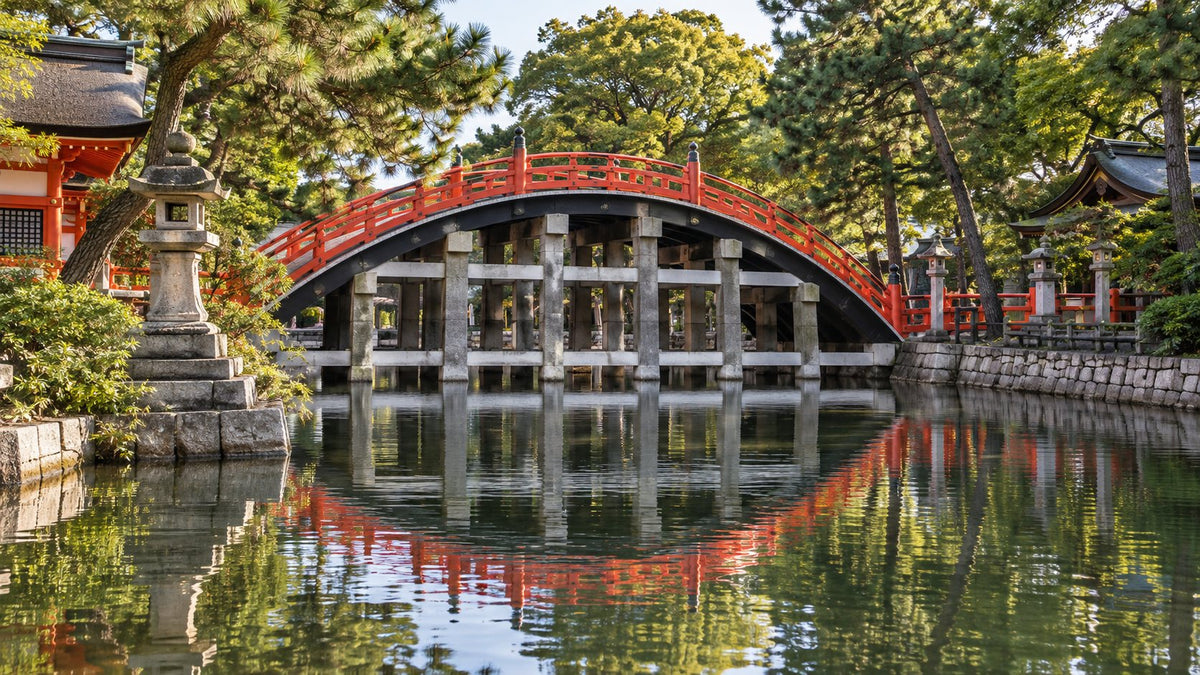
Autumn leaves in and around Osaka usually peak from mid-November to early December. Inside the city, the best places are Osaka Castle Park, the ginkgo trees on Midosuji Avenue and Expo '70 Commemorative Park; just outside, Minoo Park is the classic maple valley, and Kyoto and Nara are an hour or less away. The Osaka Offline Map Guide keeps parks, temples and nearby stops in one list so you can plan a leaf-viewing day around your other plans.
In Japanese, autumn leaf viewing is called momiji-gari. The timing moves each year with the weather: a warm autumn delays the colours, a cold snap speeds them up. Japanese weather services and the Japan Meteorological Corporation publish koyo (autumn foliage) forecasts from October onwards. Check them a week or two before your trip.
Several temples and gardens in the region light up their maples in the evening during the peak weeks, usually with a separate evening ticket. Popular ones sell out or have long queues. The schedule changes every year, so look up dates and booking requirements in October or early November.
If the leaves are late, focus on the earlier-turning cherry trees in Osaka Castle Park and on higher places like Minoo, which change sooner. If they are past their peak, the carpets of fallen ginkgo leaves on Midosuji and in temple gardens are still worth seeing. On a rainy day, colours look deeper; go to a covered temple veranda or a garden tea house and avoid steep paths.
Usually from mid-November to early December. Check the koyo forecasts in late October, as the peak moves by one to two weeks from year to year.
Osaka Castle Park, Midosuji Avenue's ginkgo trees, Nakanoshima Park and Expo '70 Commemorative Park are the easiest options in the city.
Yes, it is one of the best maple walks close to Osaka. Go on a weekday morning to avoid the heaviest crowds.
The Osaka Offline Map Guide and the Osaka Itineraries help you place leaf-viewing stops between the city's main areas and day trips. Both come in English, Spanish and German. For a quiet evening after a day outside, The Mending Room in Osaka is a cozy novel set in the city, available in English and Spanish.
Seasonal timing, times and prices are planning estimates. Check foliage forecasts and official sites before you go.
Weitere Geschichten aus dem Tabiara-Reisemagazin.
Set aside half an hour in Amsterdam for two practice themes: Forward together, back together and The middle belongs to both of...
Artikel lesen ↗Sloterdijk for its club; Amstel for the southeast. Plan cycling only if comfortable with busy everyday cycle traffic.
Artikel lesen ↗Erfurt's main station is a practical start for a Christmas market visit. Here is how to plan the route into the old...
Artikel lesen ↗Welche Erfahrungen oder Fragen möchtest du teilen?
Noch keine Kommentare. Teile gern deine Gedanken.

